Daddy Claus Christmas Family: A Real-Use Review for Embroidery Designers
When I first opened the Daddy Claus Christmas Family file, I was checking it for a custom tote bag order a client had requested for a holiday gift set. The design landed in my inbox as a set of digital illustrations across SVG, PNG, DXF, and EPS formats, with the PNG at 300 PPI. If you are used to working with machine embroidery design files, you know the first inspection happens long before the needle drops. This review comes from that place—the practical side of a designer who has to decide whether a graphics set like this will stitch cleanly, sell well, and hold up under real use.
First Look: What Daddy Claus Christmas Family Brings to the Table
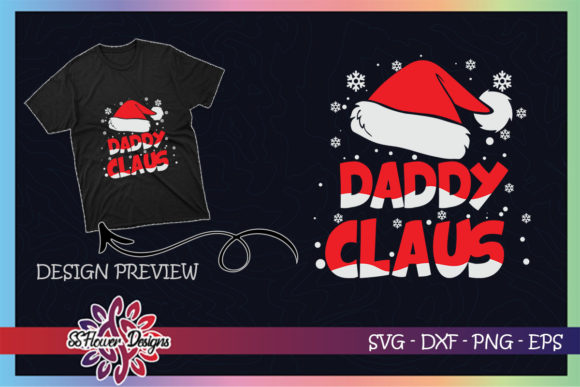
The mood of this design is warm, playful, and centered on fatherhood during the holiday season. The composition leans into a family theme with a Daddy Claus figure at the core. The overall shape feels balanced and approachable, not too sprawling or too cramped. The detail level sits in a comfortable middle ground—there is enough going on to give the design personality, but not so much that it becomes a headache to embroider on medium-sized hoops. The visual personality is friendly and giftable, which matters when you are producing personalized gift items for customers who want emotional resonance in their holiday orders.
Because this is listed under T-Shirt Designs and categorized as Graphics, I immediately thought about how it would translate from a digital cut file to an embroidery project. The SVG format tells me the design was built with clean vector paths, which is reassuring for anyone who plans to resize or tweak elements before stitching. The 300 PPI PNG also gives a solid preview for mockups and printable previews when listing on your shop.
Real Case Scenario: Preparing a Custom Embroidered Tote Bag
Let me walk you through how I actually used this design. A regular client wanted a set of tote bags for her family members, each with a different custom detail. She chose Daddy Claus Christmas Family as the centerpiece for her father-in-law's bag. The tote was a mid-weight cotton canvas in natural beige. I hooped a piece of cutaway stabilizer, floated the bag on top, and ran a test stitch on scrap fabric first to check stitch density and thread color contrast.
The design digitized well. The satin stitch areas held a clean edge, and the fill stitch sections had enough density to look solid without puckering the fabric. I used red, white, green, and a soft brown for skin tones. The thread colors popped nicely against the beige background. The design sat comfortably within a 5x7 hoop, which is my standard go-to for tote bags and sweatshirt embroidery. If you are working with a smaller hoop size, you may need to scale down carefully and inspect any tiny details like lettering or fine lines before committing.
After stitching, the bag looked polished and giftable. The client was happy, and the bag held up after the first wash when I tested it with a gentle cycle and air dry. I only recommend that step if you plan to sell finished products that will see regular use, like baby embroidery items, kitchen towels, or custom apparel.
Where Daddy Claus Christmas Family Shines in Real Embroidery Work
This design is versatile enough for several product categories, but it performs best in certain applications. Here is where I would confidently use it:
- Custom apparel like sweatshirts, t-shirts, and hoodies for holiday family gatherings.
- Tote bag design for gift sets or boutique merchandise.
- Embroidered patch projects if you back it with a sturdy stabilizer and trim close to the stitching.
- Pillow covers and blankets for cozy holiday home decor.
- Personalized gift items such as baby onesies, aprons, or kitchen towels for Christmas presents.
- Small shop product lines for Etsy seller listings or craft fair inventory.
- Printable mockup previews when using the PNG to show customers the design before production.
Because the design is provided as a digital embroidery file in SVG format, you can also convert it for use with various cutting and embroidery machines. If you are a craft business owner who sells both embroidered and heat-transfer vinyl products, having both SVG and PNG in one package saves you time.
Where to Use This Design with Caution
Not every fabric or product is a good match for Daddy Claus Christmas Family, and being honest about that will save you from ruined orders and unhappy customers. Here are the scenarios where I would advise extra testing or even avoiding the design altogether:
- Small hoop sizes under 4x4. The design has enough detail that shrinking it too much may cause the stitch density to become too tight or lose clarity.
- Textured fabrics like thick knits, fleece, or boucle. The running stitch outlines may sink into the texture and become hard to read.
- Thin or stretchy fabric like lightweight jersey without proper stabilizer. The fill stitch sections can cause puckering if the fabric shifts during stitching.
- Dark fabric if you plan to use light thread colors without a white underlay. Test your thread colors on a swatch first to ensure the design pops.
- Curved surfaces like caps or hats. The shape of the design may not wrap cleanly unless you adjust the layout specifically for a curved hoop size.
- Decorative accents with very fine lines or tiny lettering. If your version has small text, check whether it remains legible at your chosen size.
Practical Embroidery Designer Notes for Best Results
Before you commit this design to a production run or a client order, do yourself a favor and run through a short checklist. These are the steps I take with every new embroidery file, and they have saved me from more mistakes than I care to admit.
- Test on scrap fabric first. Use the same fabric type you plan to use for the final product. Check the stitch density and make sure the design does not distort after hooping.
- Review thread color contrast. Open the design in your software and compare the assigned colors against your actual thread stock. Adjust if needed before stitching.
- Confirm your hoop size. Make sure the design fits within your available hoops with at least a half-inch margin for stabilizer movement.
- Inspect small details. If the design has fine elements like eyes, noses, or small text, zoom in and check whether they will register at your intended stitch size.
- Test in black and white mockups. This helps you see the design's silhouette and density distribution without the distraction of color. It also reveals any unbalanced areas.
- Compare light and dark fabric backgrounds. A design that looks great on white may disappear on navy or black. Plan your underlay and thread choices accordingly.
- Use proper stabilizer. For most woven and knit fabrics, a medium-weight cutaway stabilizer works well. For stretchy or delicate fabrics, increase the stabilizer weight or add a topper.
- Check licensing before selling. Since this design is provided as digital illustrations in SVG, PNG, DXF, and EPS formats, confirm whether the license covers commercial embroidery, selling finished products, or reselling the digital files themselves as design assets. When in doubt, contact the seller for written clarification.
How This Design Affects Your Product Value and Customer Trust
When you stitch Daddy Claus Christmas Family onto a handmade product, you are not just adding decoration. You are communicating thoughtfulness, holiday spirit, and attention to detail. Customers who buy custom apparel or personalized gift items are often looking for something that feels unique and well-made. A cleanly stitched design builds brand consistency and professionalism in your shop, whether you sell on Etsy, at craft fairs, or through your own website.
The design itself has strong giftability. It centers on fatherhood and family, which makes it a natural fit for Christmas presents from children or partners. I have found that designs with clear emotional hooks tend to generate more buyer engagement and repeat orders. If you sell small shop product lines, having a design like this in your seasonal rotation can boost your holiday sales.
Final Thoughts on Daddy Claus Christmas Family for Your Embroidery Business
I have tested this design on cotton canvas, sweatshirt fleece, and a linen-blend apron. In each case, the machine embroidery design performed reliably with the right stabilizer and hoop setup. It is not a hyper-detailed, high-stitch-count monster that forces you into a large hoop or a heavy stabilizer. Instead, it is a practical, friendly graphics set that balances visual appeal with real production viability.
If you are an Etsy seller or a craft business owner looking for a holiday design that works across multiple product types—from sweatshirt embroidery to baby embroidery to embroidered patch projects—this one deserves a spot in your digital library. Just remember to test it first, check your hoop size, and verify your licensing before you start selling finished products or using it in commercial embroidery projects. The design is solid, but your preparation is what makes the final product shine.